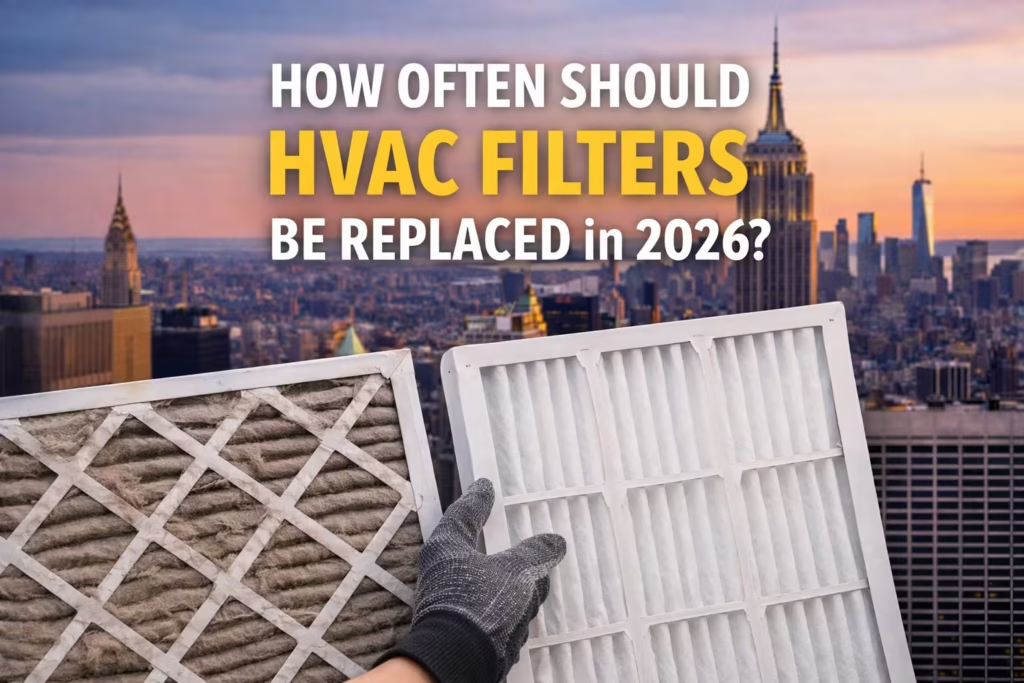
Highlights: How Often Should HVAC Filters Be Replaced in 2026?
• Most homeowners in the NY Tri-State area should replace standard 1-inch filters every 30 to 60 days in 2026
• Homes with pets, allergies, or heavy HVAC use should replace filters every 30 days
• High-efficiency 4-inch to 5-inch media filters typically last 90 to 180 days depending on airflow and environment
• Commercial spaces often need filter changes every 30 days, and in high-traffic locations sometimes every 2 to 4 weeks
• Indoor air quality standards and ventilation needs are more important in 2026 than ever, especially for businesses
• The best filter schedule depends on filter type, MERV rating, system size, and occupancy patterns
If you’re wondering how often should HVAC filters be replaced in 2026, you’re already ahead of most homeowners and commercial property owners in the New York Tri-State area. In 2026, HVAC filters do more than just “catch dust.” They protect your system’s performance, reduce energy costs, support healthier indoor air, and help your heating and cooling equipment last longer, especially in high-demand environments like New York City, Long Island, Westchester, Northern New Jersey, and Connecticut.
The Tri-State area has specific conditions that make filter replacement schedules more important than in many other parts of the U.S. Urban pollution, construction dust, seasonal pollen, coastal humidity, winter heating cycles, and year-round indoor occupancy patterns all cause HVAC filters to clog faster.
That means the correct replacement schedule in 2026 depends on your building type, how often your system runs, your filter type, and your indoor air quality goals.
In this guide, we’ll break down how often should HVAC filters be replaced in 2026 with clear timelines for homeowners and commercial spaces, explain why the Tri-State region needs a more customized approach, and give you practical examples so you know exactly what to do. We’ll also include an HVAC filter replacement checklist, cost-saving tips, and a professional recommendation to ensure your HVAC system stays efficient all year.
How Often Should HVAC Filters Be Replaced in 2026? Why the Answer Matters More Now
The question how often should HVAC filters be replaced in 2026 matters more now because energy costs are higher, indoor air quality awareness continues to grow, and HVAC systems are increasingly designed for higher efficiency, but only when airflow is maintained. HVAC filters directly affect airflow. When airflow drops, everything else suffers: comfort, humidity control, system lifespan, and your utility bill.
The U.S. Department of Energy explains that heating and cooling systems are among the largest energy users in most homes and commercial buildings, and small efficiency losses can translate into noticeable cost increases over time, especially during peak seasons. In the Tri-State region, where both summer cooling and winter heating are critical, a clogged filter forces the HVAC system to run longer, which means higher energy costs and faster wear.
In 2026, more homeowners and businesses are also focusing on indoor air health. The EPA emphasizes that indoor air can sometimes be more polluted than outdoor air, which makes filtration and proper HVAC maintenance essential for healthy buildings. That’s why filter replacement is now considered one of the simplest but most powerful actions you can take for both comfort and health.
How Often Should HVAC Filters Be Replaced in 2026? The Standard Replacement Schedule
If you want the simple answer first, here’s the general baseline schedule most Tri-State property owners can follow in 2026.
How Often Should HVAC Filters Be Replaced in 2026 for Most Homes?
For the average home using a standard 1-inch filter:
• Replace every 30 to 60 days
For homes using higher-efficiency 4-inch to 5-inch media filters:
• Replace every 90 to 180 days
For homes with pets, smokers, allergies, or heavy HVAC use:
• Replace every 30 days
For vacation properties or low-occupancy homes:
• Replace every 60 to 90 days (if system use is minimal)
Why this schedule works: Standard filters clog quickly because they have less surface area. When airflow decreases, your HVAC system works harder and can develop issues such as frozen coils in summer or overheating in winter.
Example: A family in Queens running central AC daily during summer will likely need a new 1-inch filter every 30 days. Meanwhile, a suburban home in Connecticut using a 4-inch media filter might stretch to 120 days if there’s minimal dust and no pets.
How Often Should HVAC Filters Be Replaced in 2026 for Commercial Spaces?
Commercial properties typically require more frequent changes due to higher occupancy and longer run times:
• Replace every 30 days for most commercial systems
• Replace every 2 to 4 weeks for high-traffic environments like retail stores, restaurants, clinics, gyms, and schools
• Replace every 60 to 90 days for low-traffic offices with high-capacity filters and well-managed maintenance schedules
• Replace monthly during peak cooling and heating seasons even if you’re on a quarterly schedule
Example: A restaurant in Manhattan may need filter changes every 2 to 3 weeks because cooking oils, foot traffic, and constant HVAC runtime clog filters faster. A professional office in Stamford may be fine with every 30 to 60 days if the system has larger filter cabinets and consistent cleaning.
How Often Should HVAC Filters Be Replaced in 2026? The Tri-State Region Makes Filters Clog Faster
The NY Tri-State area creates unique conditions that directly affect filter replacement frequency.
Urban Dust and Air Particles
NYC and surrounding metro areas contain higher concentrations of airborne particulates from traffic, dense building density, and constant construction. Filters capture these particles, which means they clog faster than filters in rural or suburban areas.
Example: A condo in Brooklyn next to a major roadway will collect more black dust and airborne particles. Even if the home is clean, the HVAC filter can darken quickly because it’s capturing fine particulates.
Seasonal Pollen and Allergens
Spring and fall pollen in New Jersey and Connecticut can significantly increase filter load, especially in homes that open windows or have older seals.
Example: A homeowner in Westchester may experience increased allergies every spring. During this season, replacing filters every 30 days can noticeably improve comfort and reduce indoor pollen buildup.
Heating Season Dry Air and Dust Movement
During winter, indoor air becomes drier, which causes dust to float and circulate more easily. Heating cycles also run frequently, pulling dust through the system.
Example: A property in Long Island using a furnace daily from December through February will often see filters clog faster during winter than expected, especially if the home has carpets or older ducts.
Filter Type and MERV Rating Changes Everything
Filter type plays a major role in your replacement schedule. Many homeowners buy “the best” filter without realizing that higher filtration isn’t always better if the system isn’t designed for it.
Standard 1-Inch Fiberglass Filters (Lowest Filtration)
• Replace every 30 days
• Cheap and common
• Captures large dust but not fine particles
• Often used in older systems
This is the most common filter type in older NYC homes, rental properties, and small commercial spaces. They clog quickly and should be replaced frequently.
Pleated 1-Inch Filters (Medium Filtration)
• Replace every 30 to 60 days
• More effective than fiberglass
• Captures smaller particles
• Can restrict airflow if MERV is too high
Pleated filters are common in modern homes because they capture more dust and allergens. But if you buy very high MERV pleated filters, airflow can drop faster, meaning more frequent replacement is necessary.
4-Inch to 5-Inch Media Filters (High Surface Area, High Performance)
• Replace every 90 to 180 days
• Excellent balance of filtration and airflow
• Often recommended for central systems
• Great option for Tri-State homes with allergies
These are ideal if your HVAC system is designed for them. Their larger surface area means they trap more debris without restricting airflow as quickly.
HEPA and Specialty Filters (Commercial & Medical Use)
• Replacement schedules vary, often monthly or per facility requirements
• Used in clinics, labs, medical offices, and some high-performance buildings
Commercial properties with strict air quality requirements should follow maintenance schedules based on manufacturer recommendations and building conditions.
For broader indoor air quality guidance, the CDC explains that ventilation and filtration are key contributors to healthier indoor environments, especially in shared spaces (https://www.cdc.gov/niosh/topics/indoorenv/default.html). For businesses, this matters because indoor air comfort affects customer experience, employee productivity, and compliance expectations.
Homeowner Replacement Schedules by Lifestyle
Let’s break down realistic schedules based on how Tri-State homes are actually lived in.
Homes With Pets
• Replace every 30 days (1-inch filters)
• Replace every 60 to 90 days (4-inch media filters)
Pets shed hair and dander continuously. Even if you vacuum frequently, HVAC return air pulls dander into the filter and clogs it quickly.
Example: A dog owner in Staten Island may notice filters filled with hair and dust within 3 to 4 weeks, especially during seasonal shedding periods.
Homes With Allergy or Asthma Concerns
• Replace every 30 days (recommended)
• Consider upgrading to a properly sized media filter system for better filtration
The goal isn’t only to keep the system clean, but also to reduce indoor triggers. Filters that are left too long become less effective and may allow particles to re-circulate due to airflow bypass.
Homes With Frequent Cooking (NYC Kitchens)
• Replace every 30 to 45 days
Cooking oils, smoke particles, and indoor VOCs increase filter load even if you use exhaust fans.
Example: A family in Manhattan cooking daily can clog filters faster than expected because fine particles and oils get pulled into returns.
Homes With Renovations or Construction Nearby
• Replace every 2 to 4 weeks during construction periods
Construction dust is one of the fastest ways to clog a filter and damage HVAC equipment.
Example: A home renovation in New Jersey often creates fine dust that passes through the air and ends up in ductwork. During renovations, changing filters frequently protects the blower motor and coil from dust buildup.
How Often Should HVAC Filters Be Replaced in 2026? Commercial Filter Replacement by Business Type
Commercial spaces require tighter schedules because customer comfort and operational needs are directly affected by air quality and HVAC performance.
Offices and Professional Buildings
• Replace every 30 to 60 days
• Replace monthly during peak seasons
• Consider quarterly only if high-capacity filters and clean environment
Retail Stores and Shopping Centers
• Replace every 2 to 4 weeks
Retail environments bring in dust constantly through doors, and HVAC runs heavily to offset heat from lighting and occupancy.
Restaurants and Food Service Locations
• Replace every 2 to 3 weeks
Cooking particles and higher heat loads cause filters to clog quickly.
Medical Offices and Clinics
• Replace every 2 to 4 weeks (or as required)
Filtration requirements are higher and must be consistent. Consult your HVAC provider for system-specific schedules.
Gyms and Fitness Studios
• Replace every 2 to 4 weeks
High occupancy, sweat humidity, and constant airflow lead to rapid clogging.
Many commercial building owners follow indoor air standards that align with ASHRAE’s guidance for ventilation and indoor air quality, which is frequently referenced by facility managers for maintaining healthier buildings. While you don’t need to read standards to manage your HVAC filter schedule, it’s helpful to know that modern building expectations prioritize ventilation and filtration, and filters are the first line of protection.
Warning Signs Your Filter Must Be Changed Immediately
Even if you follow a schedule, you should still watch for warning signs that your filter needs replacement right away.
• Dust buildup around vents or returns
• Weak airflow from vents
• Rooms taking longer to cool or heat
• HVAC running longer than normal
• Higher energy bills without usage changes
• Musty smell when system turns on
• Allergies getting worse indoors
• Filter looks gray, dark, or clogged when inspected
• You hear whistling at the return grille (often airflow restriction)
Example: A homeowner in Brooklyn notices the AC runs longer and the apartment feels humid even with the system on. The filter looks dark and clogged. After replacement, airflow improves and humidity control returns, reducing how long the system needs to run.
The Cost of Not Changing Them on Time
Many homeowners and business owners delay filter replacement because it feels minor. But the long-term costs are real.
Higher Energy Bills
A dirty filter restricts airflow, causing the blower motor to work harder and the system to run longer to achieve the same set temperature. Energy Star explains that properly maintained heating and cooling equipment is essential for efficiency, and filters play a direct role in helping systems run as designed.
Example: If your system runs 15% longer due to restricted airflow during summer in NYC, that extra runtime can noticeably increase your electricity bill.
Increased Repair Risk
Dirty filters lead to:
• Frozen evaporator coils in summer
• Overheated heat exchangers in winter
• Blower motor strain
• Reduced compressor life
• Higher static pressure and duct stress
Commercial example: A small retail store in Queens experiences repeated AC breakdowns. The root cause is neglected filters causing coil freezing and compressor stress. Simple maintenance would have prevented expensive service calls.
Shorter Equipment Lifespan
Replacing filters regularly is one of the cheapest ways to extend equipment life. A system that should last 15 years may fail sooner if airflow is consistently restricted.
Best Filter Replacement Practices (Step-by-Step)
Here’s a simple process you can follow in 2026.
Step 1: Identify Your Filter Size and Type
Check the filter edge for size (example: 16x25x1). Use the correct size to avoid air bypass.
Step 2: Choose the Right MERV Rating
Common MERV ranges:
• MERV 5–8: basic dust protection
• MERV 9–12: better allergens and fine particles
• MERV 13+: higher filtration but can restrict airflow if system isn’t designed for it
For most Tri-State homes, MERV 8 to 11 is a good balance unless your system is specifically designed for higher ratings.
Step 3: Mark Your Replacement Date
Write the install date on the filter frame so you always know how long it’s been used.
Step 4: Inspect Monthly Even If You Replace Less Often
Even if your schedule is every 90 days, a quick monthly glance helps catch issues like unexpected dust events or construction.
Step 5: Pair Filter Replacement With Maintenance
Filter replacement helps most when paired with coil cleaning, duct inspection, blower evaluation, and thermostat calibration.
Internal link (add your service page here): For seasonal maintenance and filter optimization, schedule a professional tune-up through our HVAC maintenance service.
Smart Tech and Subscription Trends in the Tri-State Area
A major trend in 2026 is homeowners using smart systems and subscriptions to stay on schedule.
Smart Thermostats and Filter Alerts
Many smart thermostats track runtime and can remind you when filters should be replaced. This is especially helpful in the Tri-State area where HVAC use varies greatly between seasons.
Auto-Delivery Filter Subscriptions
Many property owners choose monthly delivery subscriptions so they never forget. This works well for:
• busy NYC households
• landlords managing multiple units
• commercial property managers
Even with subscriptions, the key is matching filter delivery frequency to actual usage. A monthly delivery is ideal for 1-inch filters in high-demand homes or commercial spaces, but may be too frequent for large media filters.
Recommended Schedules (Quick Reference)
Here’s a practical schedule guide you can follow:
Home Filter Replacement Schedule (Tri-State)
• Standard 1-inch fiberglass: every 30 days
• 1-inch pleated: every 30 to 60 days
• 4-inch to 5-inch media: every 90 to 180 days
• Homes with pets or allergies: every 30 days
• Renovation or construction: every 2 to 4 weeks
Commercial Filter Replacement Schedule (Tri-State)
• General office buildings: every 30 days
• Retail spaces: every 2 to 4 weeks
• Restaurants: every 2 to 3 weeks
• Gyms: every 2 to 4 weeks
• Medical offices: every 2 to 4 weeks or per requirement
• High-rise / multi-tenant common areas: monthly minimum
Get Professional Filter Replacement + HVAC Maintenance in the NY Tri-State Area
If you’ve been asking how often should HVAC filters be replaced in 2026, the best move is to pair the right filter schedule with professional system maintenance. As an HVAC installation, repair, and maintenance service provider serving New York, New Jersey, and Connecticut, we help homeowners and commercial property owners choose the right filters, improve indoor air quality, and keep HVAC systems running efficiently year-round.
Contact us today to schedule:
• HVAC filter replacement and system inspection
• Seasonal tune-ups for heating and cooling systems
• Commercial filter maintenance plans
• Indoor air quality improvements and upgrades
• HVAC repairs and high-efficiency system replacements
A professional assessment can also identify airflow issues, duct leakage, oversized filters, and coil buildup that could be reducing your system’s efficiency even if you change filters on time.
FAQ: How Often Should HVAC Filters Be Replaced in 2026?
How often should HVAC filters be replaced in 2026 for most homes?
Most homes in the NY Tri-State area should replace 1-inch filters every 30 to 60 days in 2026. Homes with pets, allergies, or heavy HVAC usage should replace them every 30 days.
How often should HVAC filters be replaced in 2026 for commercial buildings?
Most commercial properties should change filters every 30 days, and high-traffic businesses like retail stores, restaurants, and gyms often need changes every 2 to 4 weeks.
Can replacing HVAC filters reduce energy bills?
Yes. Clean filters improve airflow, helping your HVAC system run efficiently and reducing runtime. This can lower heating and cooling costs and reduce strain on major components.
What happens if I don’t replace my HVAC filter on time?
A dirty filter restricts airflow, causing higher energy usage, poor comfort, frozen coils, overheating, and increased breakdown risk. Over time, it can shorten equipment lifespan.
Should I use a higher MERV filter to improve air quality?
Higher MERV filters can improve filtration, but they may reduce airflow if your system isn’t designed for it. Most Tri-State homes do well with MERV 8–11. For advanced needs, consider a media filter system or IAQ upgrade.
How do I know if my HVAC filter is clogged?
If airflow feels weak, rooms are uneven, dust builds up quickly, or the filter looks dark and packed with debris, it’s time to replace it. You should also inspect monthly even if you follow a longer replacement schedule.
Is filter replacement different for older NYC buildings?
Yes. Older buildings often have older ductwork, more dust infiltration, and higher particulate exposure. Filters can clog faster, and monthly replacement is often the safest schedule.